

Hear From Our Clients

Functioning gutters keep water away from your foundation, basement, and landscaping. They prevent ice dams in winter and handle the oak and maple debris that clogs systems every fall.
When your rain gutter repair gets done right, you stop worrying about basement flooding during nor’easters. You’re not dealing with foundation cracks or rotted fascia boards. Your landscaping stays intact instead of washing away every time it rains.
Long Island’s salt air corrodes metal faster than inland areas. Our residential gutter repair addresses that reality with materials and techniques built for coastal conditions. You get gutters that drain properly during storms, shed ice in winter, and hold up against the humidity and debris that Suffolk County throws at them year-round.
We’ve spent over a decade handling roof gutter repair across Suffolk County. We know how Long Island weather beats up gutter systems—the salt air, the freeze-thaw cycles, the storms that roll through every season.
We’re not a national chain. We’re local contractors who understand that Medford homes face specific challenges: coastal humidity, abundant tree coverage, and weather that swings from humid summers to harsh winters. That’s why we use materials rated for these conditions and installation methods that account for Long Island’s climate patterns.
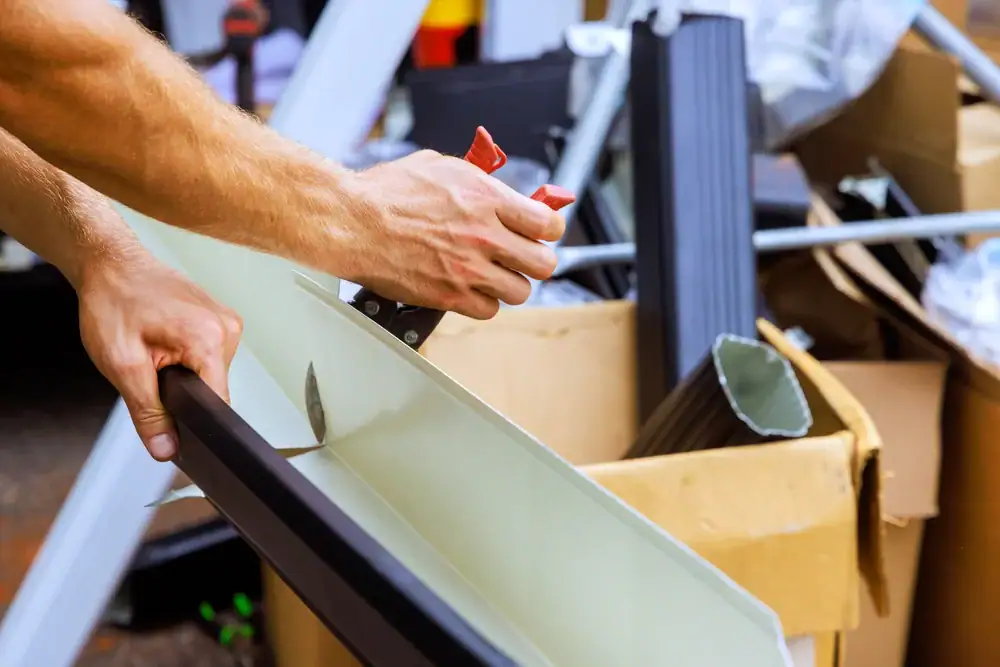
First, we inspect your entire gutter system. We’re looking at pitch, fasteners, seams, downspouts, and how water actually flows when it rains. We check for rust from salt air exposure and damage from ice or debris.
Then we explain what needs fixing and why. If your gutters are sagging, we show you the failed hangers. If you’ve got leaks, we point out the separated seams or corroded sections. You see exactly what’s wrong before any work starts.
The repair itself depends on what’s failing. We might reinforce hangers, reseal joints, replace damaged sections, or adjust pitch for proper drainage. For coastal homes in Medford, we often recommend corrosion-resistant materials that handle salt air better than standard options. Once the work’s done, we test water flow to confirm everything drains correctly.

Ready to get started?
We handle leak repairs at seams and joints where water escapes during heavy rain. Sagging gutters get new hangers and proper pitch restoration so water flows toward downspouts instead of pooling. Damaged sections from storm debris or ice get replaced with materials that match your existing system.
Downspout repairs are part of the package. If water’s not making it away from your foundation, we fix clogs, reattach loose sections, or extend downspouts to proper drainage points. For Medford homes dealing with Long Island’s tree coverage, we often find that debris buildup has damaged gutter interiors—we address that too.
Corrosion repair matters here because salt air accelerates metal deterioration. We assess whether sections can be sealed and treated or need replacement. For homes near the coast or with older gutter systems, this often means upgrading to materials that resist Suffolk County’s harsh conditions better than what was originally installed.

Look at how much of the system is failing. If you’ve got one or two problem spots—a leaking seam, a sagging section, a damaged downspout—repair makes sense. You’re fixing specific issues without replacing gutters that still work fine.
Replacement becomes the better option when you’re dealing with widespread corrosion, multiple leaks, or structural problems throughout the system. On Long Island, salt air often causes this kind of system-wide deterioration in older gutters. If more than 30% of your gutters show damage, replacement usually costs less long-term than patching problem after problem.
We’ll tell you honestly which route makes sense for your situation. Sometimes a targeted repair buys you several more years. Other times, you’re better off replacing now instead of paying for repairs that only delay the inevitable.
Salt air is the biggest factor. Coastal humidity carries salt particles that corrode metal gutters faster than you’d see inland. This affects Medford even though you’re not directly on the water—Suffolk County’s proximity to the ocean means salt air reaches your property regularly.
Tree debris creates the second major issue. Long Island’s oak and maple trees drop leaves, seeds, and branches that clog gutters and hold moisture against metal surfaces. That constant dampness accelerates rust and weakens seams. During fall, this debris combines with rain to create a sludge that’s particularly destructive.
Winter freeze-thaw cycles add stress. Water that doesn’t drain properly freezes, expands, and damages gutter materials. Ice dams form when clogged gutters prevent proper drainage, forcing water under shingles and into your home. These seasonal patterns mean Medford gutters face more wear than systems in drier or less coastal climates.
Most repairs finish in a few hours to a full day, depending on what’s wrong. A simple leak repair or hanger replacement might take two to three hours. More extensive work—replacing damaged sections, fixing multiple problem areas, or addressing structural issues—can take a full day.
Weather affects timing too. We can’t seal joints or apply certain materials in rain or extreme cold. For Long Island homes, we often schedule repairs during dry stretches in spring or fall when conditions are ideal for the work and materials to set properly.
Emergency repairs after storms sometimes happen faster. If a nor’easter damages your gutters and water’s threatening your foundation, we prioritize getting temporary protection in place quickly, then return for permanent repairs once conditions allow. The goal is stopping immediate damage while ensuring the final repair lasts.
A proper repair on a fundamentally sound gutter system performs just as well as new gutters in that specific area. If we’re fixing a leak at a seam, that sealed joint should last as long as the surrounding gutter material. Same with replaced hangers or patched sections—the repair itself isn’t the weak point.
The question is really about the overall system condition. If your gutters are 15 years old with some corrosion but mostly intact, a targeted repair extends their life significantly. You’re addressing problems before they spread while the bulk of the system remains functional.
What doesn’t work is repeatedly repairing a system that’s deteriorating everywhere. If we fix a leak today but the gutters show corrosion in multiple spots, you’ll likely face another repair soon. That’s when we recommend replacement—not because repairs don’t work, but because you’re better off with a complete system than playing whack-a-mole with an aging one.
Yes. Long Island storms can damage gutters quickly, and waiting days for repairs means water damage to your foundation, basement, or siding. We respond to emergency calls when storm damage threatens your home.
Emergency work focuses on stopping active damage first. If a section of gutter tore away and water’s pouring against your foundation, we secure that area immediately. Sometimes that means temporary fixes until we can return for permanent repairs—other times we can complete the full repair right away depending on damage extent and weather conditions.
After major storms like nor’easters, demand spikes across Suffolk County. Calling quickly gets you on the schedule faster. We prioritize cases where water damage is actively occurring or imminent, then work through repairs where gutters are damaged but not immediately threatening the structure. The key is getting your home protected before secondary damage compounds the problem.
Repairs typically cost a fraction of replacement—sometimes 20-30% depending on what needs fixing. A leak repair or hanger replacement might run a few hundred dollars. Replacing an entire gutter system on a typical Medford home runs several thousand.
The math changes when you’re looking at extensive repairs. If fixing your gutters costs 60-70% of replacement, you’re better off replacing. You get a complete new system with a full warranty instead of patched-up gutters that might need more work soon.
We price both options when the situation’s borderline. Sometimes repair makes sense now even if replacement is coming in a few years—you’re not ready for the investment, and the repairs buy you time. Other times, the numbers clearly favor replacement. We lay out the costs and expected lifespan for each approach so you can decide what works for your situation and budget.
Other Services we provide in Medford