
Hear From Our Clients
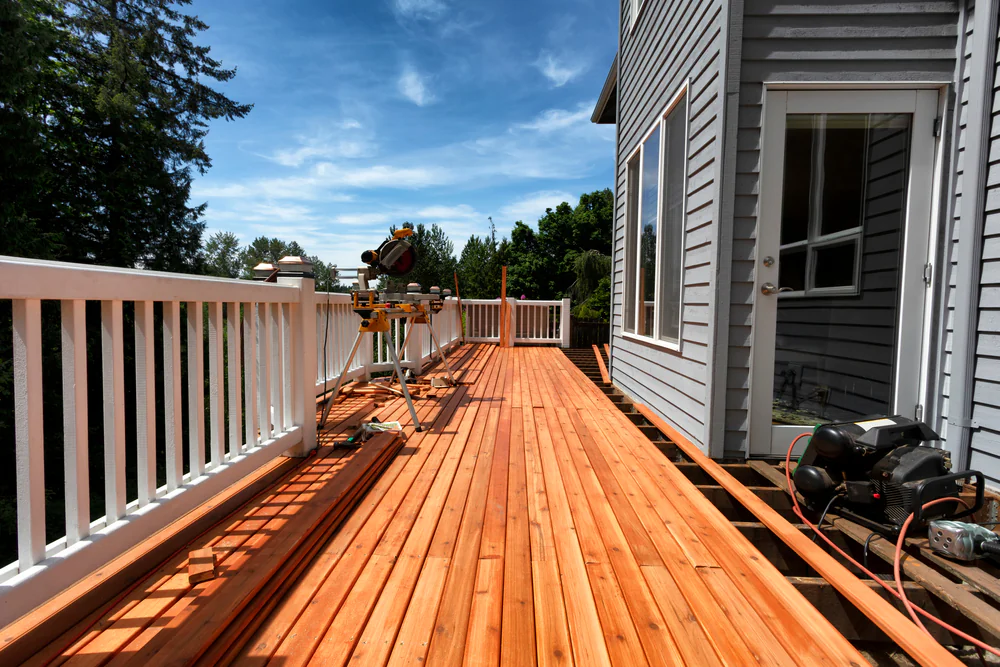
You’re not looking for a Band-Aid. You need deck repair that actually solves the problem—so you’re not calling someone back in six months because the same board is loose again or the railing feels shaky when your kids lean on it.
That’s what separates real deck repair from a quick patch job. We don’t just replace what’s visible. We check what’s underneath—the joists, the framing, the fasteners that salt air loves to corrode. If there’s rot in the structure, you’ll know before it becomes a safety issue. If your deck can be repaired, we’ll tell you. If it can’t, we’ll tell you that too.
Most deck repairs in St. James, NY take one to three days depending on the damage. Simple board replacements or railing fixes? Usually done in a day. Structural work or partial rebuilds? A few days, but you’ll have a deck that’s safe, code-compliant, and built to handle another decade of Suffolk County summers and winters.
We’ve spent more than 10 years working on decks across St. James, NY and the surrounding areas. We’re licensed contractors who know what Long Island weather does to outdoor structures—and how to fix it right.
Salt air from the Sound, freeze-thaw cycles every winter, humidity all summer. Your deck takes a beating that most inland properties never see. We’ve repaired hundreds of decks dealing with the same issues yours probably has: corroded fasteners, rotting boards, railings that don’t meet current code.
We handle the permits, we source the materials, and we don’t leave until the work is done correctly. No surprises, no upselling—just straightforward deck repair from people who’ve been doing this long enough to know what actually works in this climate.
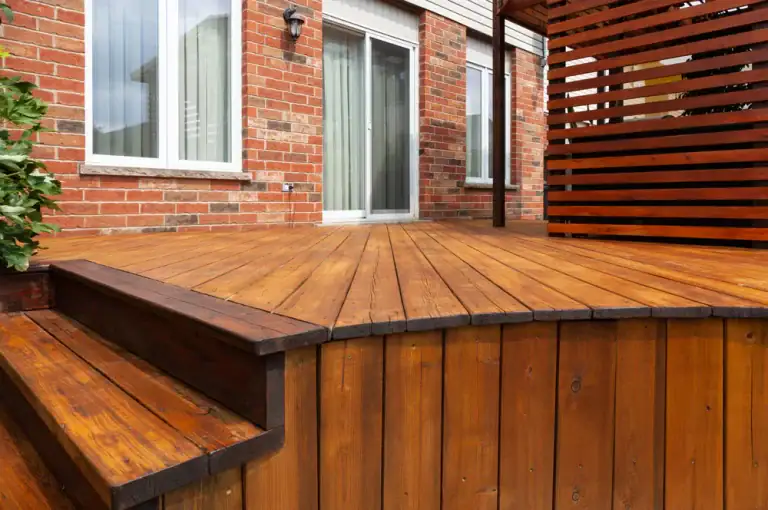
First, we come out and inspect your deck. Not just the surface—we’re checking load-bearing capacity, looking for hidden rot, testing railings, examining fasteners and flashing. This takes about an hour, and you’ll get a clear assessment of what needs to be fixed and why.
Then we give you options. If it’s a straightforward repair—replacing boards, fixing railings, addressing surface damage—we’ll quote that work. If we find structural issues, we’ll explain what’s compromised and what it’ll take to make it safe. When repairs cost more than half of what a replacement would run, we’ll tell you that too. You decide what makes sense for your situation and your budget.
Once you approve the work, we handle permits if needed and schedule the job. Most repairs take one to three days depending on scope. We work with pressure-treated lumber, cedar, and composite materials like Trex or TimberTech—whatever matches your existing deck or makes sense for a repair. When we’re done, your deck is safe, stable, and ready for whatever you throw at it.
Ready to get started?
Deck repair means different things depending on what’s wrong. For most St. James homeowners, it starts with replacing rotted or damaged boards—the ones that feel spongy underfoot or have visible cracks and splits. We pull those out, check the framing underneath, and install new boards that match your existing deck.
Railings are another common issue. Loose posts, wobbly balusters, corroded fasteners—these aren’t just annoying, they’re safety hazards. We rebuild or replace railings to current code, which matters both for your family’s safety and for your home’s insurability. If your deck was built more than 10 years ago, there’s a good chance the railing doesn’t meet today’s standards.
Structural repairs go deeper. If joists are rotted, if beams are compromised, if the ledger board (the part attached to your house) is failing—that’s when repair gets more involved. We’ll replace damaged framing, reinforce weak areas, and address the root cause so the problem doesn’t come back. In St. James, that often means dealing with moisture issues or upgrading flashing and fasteners to handle coastal conditions better.
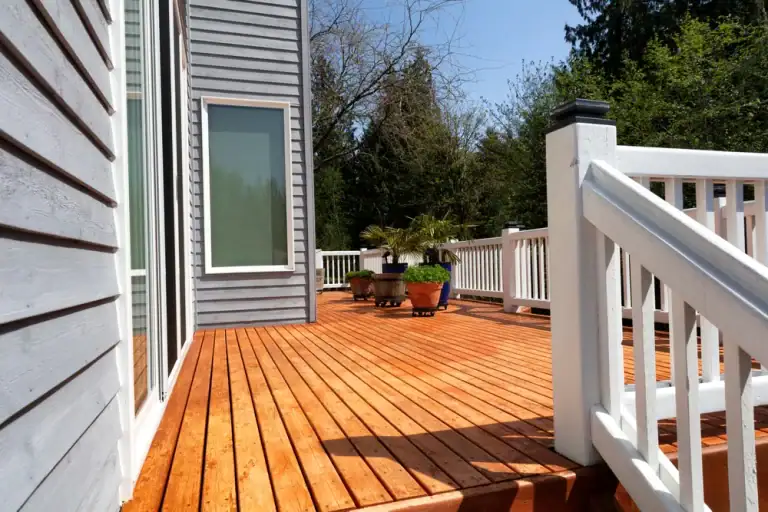
If less than 25 percent of your deck boards are damaged and the framing is solid, repair makes sense. If the joists, beams, or structural supports show rot or instability, replacement is usually the better call.
Here’s a practical test: if you’re looking at repair costs that exceed 50 percent of what a new deck would cost, replacement gives you a completely new structure with modern safety standards and materials designed to last 25-plus years. We’ll walk your deck with you and give you an honest assessment. If it can be repaired, we’ll repair it. If it’s time for a rebuild, we’ll explain why and what that looks like cost-wise.
The other factor is code compliance. Older decks often don’t meet current building standards for railing height, baluster spacing, or ledger board attachment. Sometimes bringing an old deck up to code costs nearly as much as starting fresh.
Long Island’s coastal climate is tough on decks. Salt air from the Sound accelerates metal corrosion, so fasteners, flashing, and railing hardware fail faster than they would inland. Freeze-thaw cycles every winter cause wood to expand and contract, which leads to cracks, splits, and loosened connections.
Humidity in summer promotes rot, especially in areas where water sits—like where boards meet the frame or around posts. If your deck doesn’t have proper drainage or if the flashing around the ledger board is compromised, moisture gets trapped and rot spreads fast.
Pressure-treated lumber typically lasts 12 to 20 years in this environment, but that assumes regular maintenance. If you’re not sealing or staining your deck every few years, UV exposure and moisture penetration shorten that lifespan. Composite decking lasts longer—25 to 35 years—but even composite needs proper installation and occasional maintenance to perform well in Suffolk County’s conditions.
Simple repairs like replacing a few boards or fixing loose railings usually take one day. More extensive work—replacing multiple sections, rebuilding railings, or addressing structural issues—takes two to three days. Partial rebuilds where we’re replacing significant framing or doing major structural work can take one to two weeks.
Timeline depends on scope, weather, and whether permits are required. If your repair involves structural changes or if your deck is attached to your house in a way that requires a building permit, that adds a few days to the front end while we handle paperwork. We don’t start work until permits are approved, which protects you if there’s ever an insurance claim or inspection down the line.
We’ll give you a realistic timeline upfront. If we run into unexpected issues—hidden rot, framing that’s worse than it looked, code compliance problems—we’ll stop, explain what we found, and let you decide how to proceed before we do any additional work.
It depends on the scope of work. Replacing a few boards or fixing railings typically doesn’t require a permit. Structural repairs—anything involving joists, beams, ledger boards, or posts—usually do. If you’re rebuilding more than 25 percent of the deck or making changes that affect how it’s attached to your house, you’ll need a permit.
We handle permit applications as part of the job. It’s not just a bureaucratic hassle—permits ensure the work meets current building codes, which matters for safety, insurance, and resale value. If you ever sell your home, unpermitted structural work can become a problem during the buyer’s inspection.
Suffolk County has specific requirements for deck construction, including railing height, baluster spacing, ledger board attachment, and footing depth. If your deck was built before these codes were updated, bringing it into compliance during a repair is often required. We know the local requirements and make sure everything passes inspection the first time.
Well-maintained decks in the New York metro area typically deliver a 70 to 80 percent return on investment at resale. That means if you spend $10,000 on deck work, you can expect to recoup $7,000 to $8,000 in increased home value.
But ROI isn’t just about resale. A safe, functional deck reduces buyer inspection concerns if you sell, and it makes your home more livable while you’re in it. A rotting deck is a liability—it’s something buyers will either negotiate down on price or ask you to fix before closing. Fixing it proactively puts you in control of the cost and the quality of work.
Deck repair is almost always more cost-effective than replacement when the structure is sound. If your framing is solid and you’re just addressing surface damage or isolated problem areas, repair gives you several more years of use at a fraction of replacement cost. The key is catching problems early—waiting until small issues become structural failures turns an affordable repair into an expensive rebuild.
In most cases, yes. If you have a pressure-treated wood deck, we can source lumber that matches the dimensions and treatment level of your existing boards. Cedar is also straightforward to match. Composite decking is trickier because manufacturers change product lines, but we work with Trex, TimberTech, and Fiberon—the most common brands—and can usually find a close match or suggest a complementary option if your exact product has been discontinued.
Color matching on older composite decks can be challenging because the material fades over time. A brand-new board will look different next to one that’s been weathering for 10 years. In those situations, we’ll talk through options—sometimes replacing a larger section makes sense so the color transition isn’t as obvious, or we can suggest a contrasting accent that looks intentional rather than mismatched.
For wood decks, staining after the repair helps blend new and old boards. We’ll explain what to expect based on your specific deck and materials, so there are no surprises when the job is done.
Other Services we provide in St. James