Hear From Our Clients

You’ve already tried repairs. The cracks came back. The leaks returned after the next storm. That’s not your fault—it’s what happens when coastal moisture gets into old masonry.
A full chimney replacement means you’re done dealing with temporary fixes. No more water stains spreading across your ceiling every spring. No more wondering if that crack is a safety issue or just cosmetic.
When we replace your chimney, we’re rebuilding it for Noyack’s specific conditions. That includes proper flashing that handles wind-driven rain, a crown that sheds water instead of trapping it, and masonry materials that resist salt air corrosion. You get a system that vents correctly, protects your home’s structure, and doesn’t need constant attention every season.
The difference shows up in year three, when your neighbors are calling for repairs again and you’re not thinking about your chimney at all.
Home Team Construction has spent over a decade working on homes in Suffolk County. We’re licensed, insured, and we live here too—which means we’ve seen what Noyack winters do to chimneys that weren’t built right the first time.
Most chimney problems in this area come from the same sources: freeze-thaw damage, salt air eating through mortar, and water getting past failed flashing. We’ve developed methods that address each of these issues specifically, not generic solutions that work fine in Pennsylvania but fail here in two years.
When you call us, you’re talking to people who understand why your chimney cracked in the first place. We’ll tell you whether you need a full replacement or if targeted repairs will actually hold. No runaround, no upselling—just honest assessment from contractors who know this area.
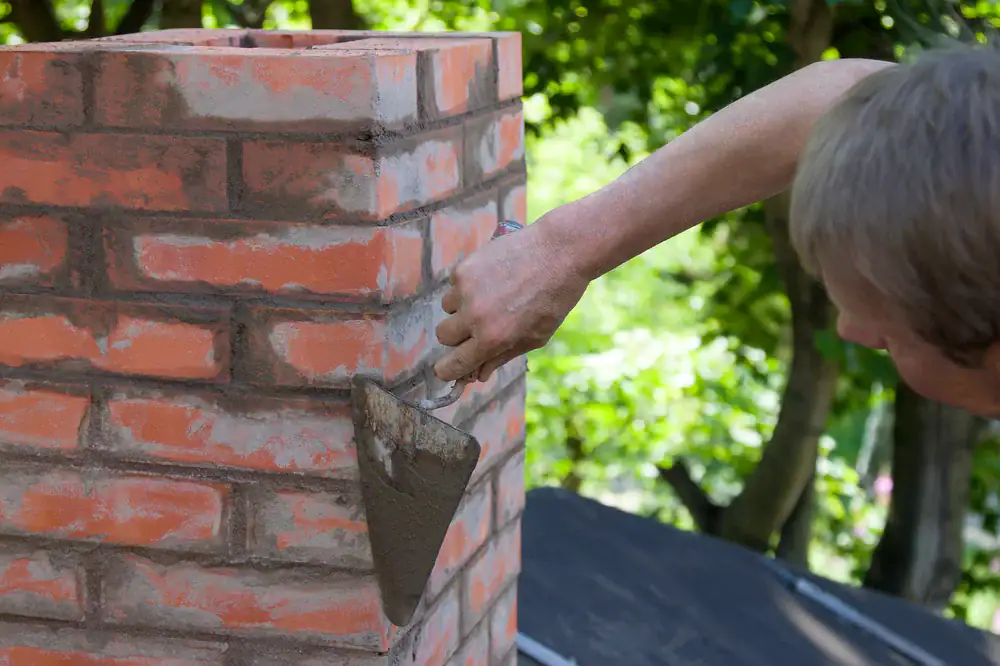
We start with a full inspection of your existing chimney—inside and out. We’re checking the flue liner condition, measuring how far the damage extends into the masonry, and looking at what’s happening where your chimney meets the roof. You get a clear explanation of what we found and whether a complete rebuild is necessary or if chimney liner replacement or chimney cap replacement would solve the issue.
If you’re moving forward with a full replacement, we carefully remove the old chimney down to a structurally sound point—sometimes that’s the roofline, sometimes it’s further down. We rebuild using materials rated for coastal exposure, install new chimney flashing that’s sealed properly, and add a chimney crown designed to shed water away from the stack. If your flue needs updating, we handle chimney flue replacement as part of the project.
The timeline depends on the scope. Most chimney stack replacements take three to five days, weather permitting. We protect your home’s interior during the work, clean up completely when we’re done, and make sure everything is sealed before we leave. You’ll know the cost upfront—no surprises when the job’s finished.

Ready to get started?
A complete chimney replacement addresses every part of the system that’s failing. That includes removing damaged masonry, rebuilding the stack with materials that resist moisture and salt air, and installing a new chimney liner if the old one’s compromised. We’re also replacing the chimney crown, which is often where water infiltration starts.
Chimney flashing replacement is part of every job we do. This is the metal seal where your chimney meets the roof, and it’s critical in Noyack where wind-driven rain tests every weak point. We use step flashing and counter flashing methods that hold up to coastal storms—not the shortcuts that leak in three years.
In Noyack, most homes were built between 1940 and 1969. Many still have original chimneys that were never designed for the moisture exposure they’re getting now. Replacing these systems isn’t just about appearance—it’s about preventing structural damage to your home’s framing and interior. Water that gets past a failing chimney doesn’t just stain your ceiling. It rots the wood around your fireplace, damages insulation you can’t see, and creates conditions for mold growth.
The average cost for complete chimney replacement in this area runs between $9,000 and $15,000, depending on height and complexity. That’s a real investment—but it’s protecting a home with a median value near $1 million in Noyack. And it’s solving a problem that only gets more expensive the longer you wait.

If you’re seeing spalling—that’s when the brick surface is flaking off in chunks—or if the chimney is leaning at all, you’re likely past the point where repairs make sense. Spalling happens when salt air draws moisture deep into the brick, then freeze-thaw cycles break it apart from the inside. You can’t repair that kind of damage. You can only replace the affected masonry.
Cracks in the chimney crown or damaged mortar joints can sometimes be repaired if they’re caught early. But if water has been getting into your chimney for multiple seasons, the damage is usually more extensive than it looks from the outside. The flue liner might be cracked, the interior masonry might be deteriorating, and the structure might be compromised in ways you can’t see without taking it apart.
We’ll give you an honest assessment after inspecting your chimney. If repairs will actually hold and save you money, we’ll tell you. If you’re going to be calling us back in two years for the same problem, we’ll recommend replacement now and explain exactly why.
Coastal exposure changes everything. Salt air doesn’t just sit on the surface of your chimney—it penetrates into the mortar and brick, drawing moisture in like a sponge. When temperatures drop in winter, that moisture freezes and expands. Water expands by about nine percent when it freezes, which creates massive internal pressure inside your masonry.
This freeze-thaw cycle happens dozens of times each winter in Noyack. Each cycle widens existing cracks and creates new ones. By spring, what looked like minor damage in the fall has turned into structural problems. Add in the wind-driven rain from coastal storms, and you’re hitting your chimney with conditions that inland homes never face.
The chimneys that last in Noyack are the ones built specifically for these conditions—with proper waterproofing, materials rated for salt air exposure, and flashing systems designed to handle wind and rain coming from multiple directions. Most older chimneys weren’t built to these standards because builders didn’t fully understand coastal exposure damage back then.
The damage accelerates. Water that’s getting into your chimney now will get deeper into the structure with every freeze-thaw cycle. Cracks widen, mortar joints fail, and eventually the chimney becomes unstable. We’ve seen chimneys in Suffolk County that needed to be completely rebuilt down to the roofline because homeowners waited too long.
But the bigger risk is what’s happening inside your home. Water coming through a failed chimney doesn’t just create ceiling stains. It’s rotting the wood framing around your fireplace, soaking insulation, and potentially creating hidden mold growth in your walls. That kind of damage costs far more to fix than the chimney itself.
There’s also the safety factor. A chimney with a cracked flue liner or deteriorating interior masonry isn’t venting properly. That means combustion gases might be leaking into your home instead of going up and out. And a structurally compromised chimney is a collapse risk, especially during high winds. The cost of replacement is high—usually $9,000 to $15,000 for a complete job—but it’s protecting a significant investment in a market where Noyack homes average close to $1.2 million.
Most complete chimney replacements take three to five days, assuming decent weather. We can’t work in heavy rain or high winds—the mortar needs proper conditions to cure, and safety becomes an issue when we’re working on your roof during storms.
Day one is usually demo and prep. We’re removing the old chimney, protecting your home’s interior, and setting up for the rebuild. Days two and three are the actual reconstruction—rebuilding the stack, installing new flashing, and making sure everything is structurally sound and properly sealed. Day four is finishing work: the chimney crown, final flashing details, cleanup, and inspection.
If we’re also doing chimney liner replacement or if your chimney is particularly tall, it might take an extra day or two. We’ll give you a specific timeline when we assess your project. Weather delays happen—this is Long Island—but we’ll keep you updated if conditions push the schedule back. The key is doing it right, not doing it fast. A rushed chimney replacement will fail in a few years, and then you’re paying for the whole job again.
It depends on where the damage stops. Sometimes the chimney is solid below the roofline and only the exposed stack needs replacement. Other times the damage goes deeper—especially if water has been leaking into the structure for years—and we need to take it down further to reach sound masonry.
We make that call after a thorough inspection. We’re looking at the condition of the bricks and mortar, checking for structural movement or leaning, and assessing the flue liner. If the lower portion is still in good shape, we’ll rebuild from the roofline up. That saves you money and time.
But if the foundation of the chimney is compromised, or if the interior damage extends below the roof, a partial replacement won’t solve anything. You’ll still have a failing chimney—it’ll just be hidden below the roofline where you can’t see it deteriorating. We’d rather do the full job once than have you call us back in two years because the problem wasn’t actually fixed. You’ll get a clear explanation of what we’re seeing and why we’re recommending a specific approach.
Yes. If your chimney is leaking during a storm or you’re seeing active water damage inside your home, call us. We can often do temporary weatherproofing to stop the immediate problem while we schedule the full replacement.
That might mean tarping the chimney, sealing obvious entry points, or doing emergency flashing work to get you through until we can do the complete job properly. We’re not going to leave you with water pouring into your living room while we wait for perfect weather to start a multi-day project.
Emergency repairs buy you time, but they’re not permanent solutions. A chimney that’s leaking badly enough to need emergency service is usually a chimney that needs full replacement. The temporary fix keeps your home protected in the short term. The replacement solves the problem for good. We’ll walk you through both steps and make sure you understand what’s happening and why.
Other Services we provide in Noyack