
Hear From Our Clients
You stop worrying every time the forecast calls for heavy rain. Your basement stays dry when nor’easters roll through. Foundation cracks don’t spread because water’s being directed exactly where it needs to go—away from your house.
That August 2024 storm that dumped 10 inches on East Setauket in less than 24 hours? Homes with properly installed seamless gutters handled it. Homes with failing systems didn’t. The difference wasn’t luck—it was capacity, installation quality, and materials that match what Long Island actually throws at them.
When your gutter system is designed for Suffolk County’s 46 inches of annual rainfall, salt air that corrodes cheap fasteners, and the debris load from mature oaks and maples, you’re not patching leaks every spring. You’re not dealing with foundation repairs that start at five figures. You’re not replacing rotted fascia boards because water’s been overflowing for months.
We’ve spent over 10 years installing and replacing gutters across Suffolk County. We’re licensed contractors who understand what coastal weather does to roofing systems—and we’ve seen what happens when gutters aren’t installed correctly for this climate.
We’re not a franchise. We’re local to Long Island, which means we’ve responded to the same storms you have. We know Setauket’s housing stock, the tree coverage in your neighborhoods, and exactly how salt air accelerates corrosion on inferior materials and improper installations.
When you call us, you’re talking to people who’ve replaced gutters after hurricane damage, installed systems that survived that thousand-year storm last August, and helped homeowners avoid the kind of foundation problems that cost more than a new car.
We start with an inspection of your current system and roofline. We’re looking at capacity issues, how water’s draining now, where it’s failing, and what your roof’s pitch and square footage actually require. Not every home needs the same setup.
You’ll get a straightforward estimate that breaks down materials, labor, and what we’re recommending based on your specific situation—roof size, tree coverage, how your property slopes. We’re not upselling you on features that don’t match your home’s needs.
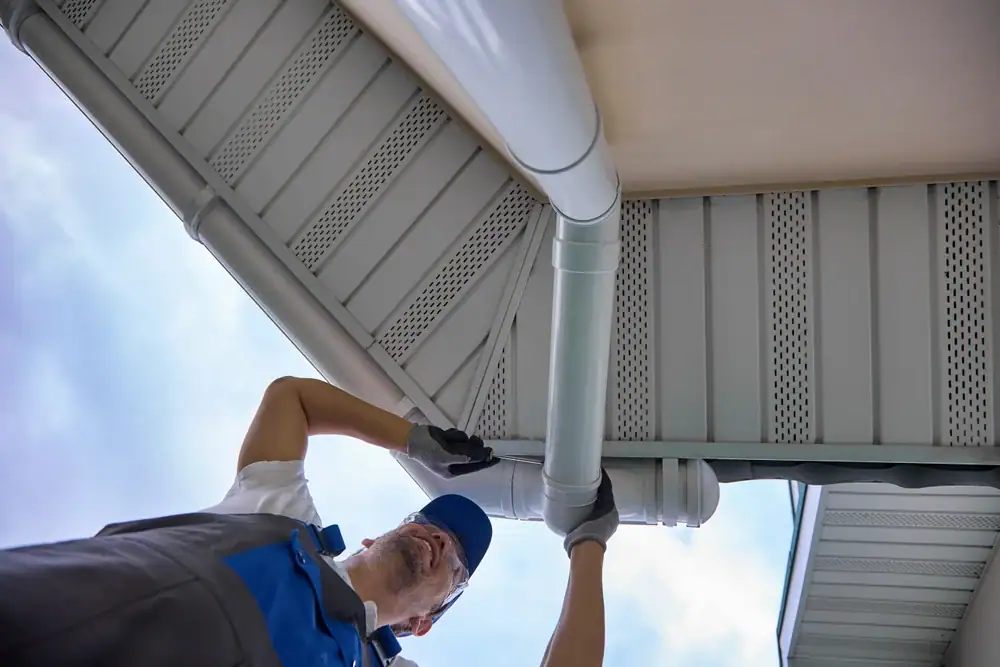
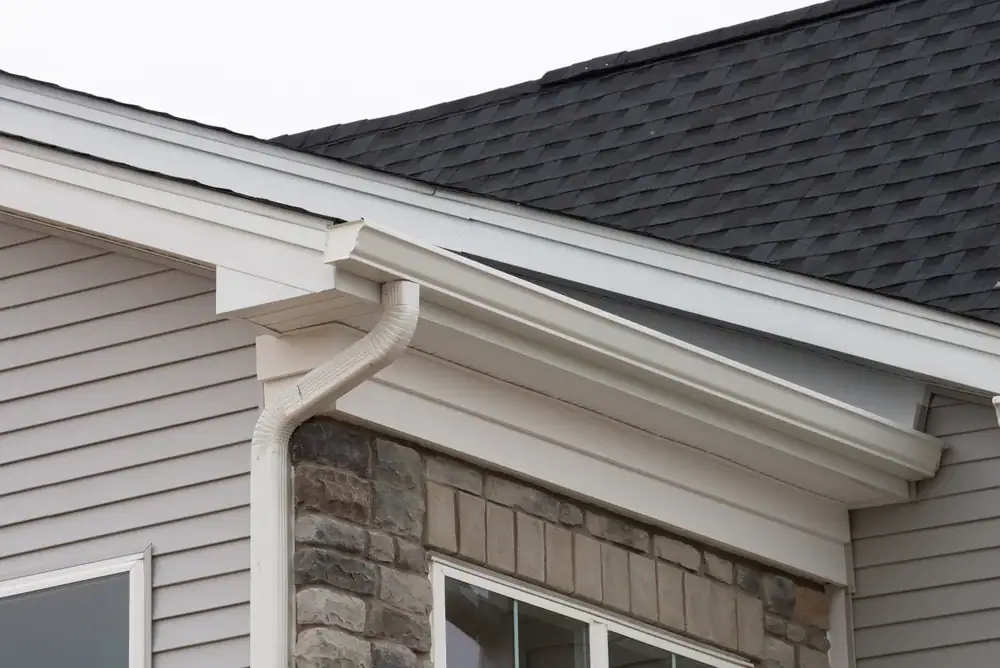
Installation starts with removing your old gutters and inspecting the fascia for rot or damage. If there’s an issue, we’ll address it before new gutters go up—because mounting a seamless system to compromised wood doesn’t work. We install seamless aluminum gutters custom-formed on-site to your home’s exact measurements, eliminating the weak points where sectional gutters leak. Downspouts are positioned to move water away from your foundation, and we make sure everything’s sloped correctly so water doesn’t pool.
After installation, we test the system and walk you through maintenance basics. Then we clean up and you’ve got a gutter system that’s built to last 20 to 30 years in Suffolk County’s climate.

Ready to get started?
We install seamless aluminum gutters because they’re the best match for Long Island’s coastal conditions. Aluminum doesn’t rust like steel, handles salt air without corroding through, and when it’s installed as a seamless system, you eliminate the joints and seams where traditional gutters eventually fail.
For most Setauket homes, we’re installing six-inch gutters instead of the standard five-inch size. That extra inch of capacity handles 40% more water volume, which matters when you’re dealing with heavy spring rains, fall storms, or the kind of downpour that hit East Setauket last summer. If your roof has a steep pitch, large square footage, or you’ve got significant tree coverage, that capacity difference keeps water moving instead of overflowing.
Downspouts are sized and positioned based on your roof’s drainage needs and your property’s grading. We’re not just connecting them to the gutters—we’re making sure water’s being directed away from your foundation and not pooling where it’ll cause problems. In some cases, that means adding extensions or adjusting placement so water doesn’t erode landscaping or seep into basements.
All fasteners and hangers are corrosion-resistant because cheap hardware fails first in salt air. We’re securing gutters every two feet so they don’t pull away from the roofline under snow load or when ice dams form during Long Island’s winters.

Most full gutter replacements in Setauket run between $1,200 and $4,000 depending on your home’s size, the linear footage needed, and whether there’s fascia damage that needs repair before installation. The average project costs around $2,200.
Per linear foot, you’re looking at $6 to $14 for seamless aluminum gutters with professional installation. That range accounts for differences in gutter size (five-inch versus six-inch), the number of corners and downspouts, roof height, and how accessible your roofline is.
If we find rotted fascia boards during the old gutter removal, that repair adds to the cost—but it’s not optional. Mounting new gutters to damaged wood means they’ll pull away within a year or two. The cost of doing it right the first time is always less than redoing a failed installation.
Properly installed seamless aluminum gutters typically last 20 to 30 years in Suffolk County. That lifespan assumes correct installation, appropriate materials for coastal conditions, and basic seasonal maintenance like clearing debris twice a year.
The seamless construction is what extends the lifespan. Traditional sectional gutters have joints every 10 feet that are sealed with caulk—and those seals break down from temperature swings, UV exposure, and ice expansion. Once they start leaking, water damages the fascia, and the whole system degrades faster. Seamless gutters eliminate those failure points entirely.
Salt air is the other factor that shortens gutter life if you’re using the wrong materials or cheap fasteners. Aluminum resists corrosion naturally, but if the hangers and screws are low-grade steel, they’ll rust through and your gutters will sag or detach. We use corrosion-resistant hardware specifically because we’re installing on the coast, not inland where conditions are less harsh.
Yes, if the foundation issues are being caused by water that’s not draining away from your house. Gutters control roof runoff, and when they’re failing—overflowing, leaking, or dumping water right next to your foundation—that water saturates the soil around your basement or crawl space. Over time, that causes cracks, settling, and moisture intrusion that can cost $10,000 or more to repair.
New gutters fix the problem if they’re sized correctly for your roof’s square footage and installed with downspouts that actually move water away from the foundation. That might mean extending downspouts farther from the house or repositioning them so water isn’t pooling in the same spot every time it rains.
If you’re already seeing foundation cracks or basement seepage, new gutters stop the problem from getting worse—but they won’t reverse existing structural damage. The sooner you address failing gutters, the less you’ll spend on foundation repairs down the line. It’s a lot cheaper to replace gutters than to underpin a foundation or waterproof a basement after years of water damage.
Most homes in Setauket benefit from six-inch gutters instead of the standard five-inch size, especially if you have a large roof area, steep pitch, or significant tree coverage. Six-inch gutters handle 40% more water volume, which matters during heavy spring rains and the kind of storms Long Island’s been seeing more frequently.
The size you need depends on your roof’s square footage and pitch. Steeper roofs shed water faster, which means it hits the gutters with more force and volume. If your roof is over 1,500 square feet or has multiple valleys that funnel water to one section of gutter, undersized gutters will overflow no matter how well they’re installed.
We calculate capacity during the estimate by measuring your roof and looking at how water drains across it. If five-inch gutters are adequate, we’ll tell you. But if your home’s setup requires six-inch gutters to handle the flow without overtopping, that’s what we’ll recommend—because installing gutters that can’t keep up with your roof’s drainage just means you’ll be dealing with overflow and water damage anyway.
Yes. We’ve responded to storm damage across Suffolk County for over a decade, including after that August 2024 flooding that hit East Setauket especially hard. Storm damage usually means gutters that have been torn off by wind, crushed by fallen branches, or overwhelmed by water volume they weren’t designed to handle.
If your gutters were damaged in a storm, we’ll inspect the fascia and roofline before quoting a replacement. Wind damage often pulls gutters away in a way that damages the wood behind them, and falling branches can crack fascia boards or dent the drip edge. We address those issues as part of the replacement so the new system is mounted to sound structure.
In some cases, homeowners insurance covers storm-related gutter replacement depending on your policy and the cause of damage. We can provide documentation and photos for your claim, but you’ll need to check with your insurance company about coverage specifics. Either way, we’ll get your home protected again as quickly as possible—because the longer you go without functional gutters, the more secondary damage you’re risking to siding, fascia, and your foundation.
If your gutters are leaking at multiple seams, sagging in several sections, pulling away from the fascia, or showing rust and corrosion, you’re looking at replacement rather than repair. Patchwork fixes on a failing system just buy you a few months before the next section goes.
Repairs make sense when the damage is isolated—one section got dented by a ladder, a single downspout detached, or a corner joint started leaking. But if your gutters are 15 to 20 years old and you’re seeing problems in multiple areas, repairing them is like putting new tires on a car with a blown engine. You’re spending money on a system that’s going to keep failing.
We’ll give you an honest assessment during the inspection. If repairs will actually solve the problem and buy you several more years, we’ll tell you that. But if your system is at the end of its lifespan and repairs are just delaying the inevitable, we’ll recommend replacement—because it’s the more cost-effective choice long-term, and it means you’re not calling us back every season to patch another leak.
Other Services we provide in Setauket