Summary
Replacing a roof is one of the bigger decisions a homeowner makes — and the material you choose affects your energy bills, your repair frequency, and your wallet for the next 40+ years. This post breaks down how aluminum roofing compares to asphalt shingles on cost, performance, and real energy savings, with context specific to Suffolk County's coastal climate.
If you've been watching shingles blow off your roof every nor'easter, or noticed your second floor turns into an oven every July, this comparison is worth reading before you make a decision.
Most homeowners shopping for a new roof start with one question: how much is this going to cost me? That's the right instinct — but it's easy to stop at the upfront number and miss the bigger picture. The material you put on your roof today will affect your PSEG Long Island bill every summer, your repair costs after every nor'easter, and whether you're back on the phone with a roofer in 20 years or 50. We walk through what aluminum roofing actually costs, how it performs against asphalt shingles over time, and what Suffolk County homeowners specifically need to know before making that call.
Metal Roofs for Homes: What Aluminum Actually Is and Why It Performs Differently
Aluminum roofing isn't a new idea, but a lot of homeowners still picture a barn or a warehouse when they hear "metal roof." Modern residential aluminum roofing looks nothing like that. Today's profiles mimic slate, cedar shake, Mediterranean tile, and traditional shingles so closely that neighbors often can't tell the difference from the street.
What makes aluminum different from asphalt isn't just the look — it's the physics. Aluminum reflects solar heat instead of absorbing it. It doesn't absorb water. It doesn't lose granules over time. It doesn't crack under freeze-thaw pressure. For a home in Suffolk County, where the weather swings between humid 90-degree summers and ice-storm winters, those properties matter more than they would almost anywhere else in the country.
Why Aluminum Roofing Holds Up Better in Coastal Climates Like Suffolk County
Suffolk County sits between the Long Island Sound to the north and the Atlantic Ocean to the south, with bays and harbors cutting through the East End in every direction. That means salt air isn't just a coastal concern for homes in the Hamptons or out in Montauk — it's a daily reality for homeowners in Babylon, Islip, Port Jefferson, and Brookhaven too. Salt air accelerates the breakdown of roofing materials. It strips granules from asphalt shingles faster than inland conditions would, and it causes standard steel to oxidize.
Aluminum doesn't rust. It forms a natural protective oxide layer that resists corrosion without any additional treatment. That's why aluminum is specifically recommended for coastal environments by material manufacturers and roofing industry sources alike — it's not a marketing claim, it's a chemistry fact. For a homeowner in Patchogue or Northport whose asphalt roof is already showing wear after 15 years, that distinction is worth understanding.
Beyond corrosion, aluminum roofing is engineered for wind. Standing seam aluminum systems are rated to withstand wind speeds of 110 to 150 mph. Standard asphalt shingles are typically rated for 60 to 130 mph under ideal conditions — and real-world performance during a nor'easter often falls short of the rated ceiling. If you've ever walked outside after a storm to find shingles scattered across your yard, you already know what that gap looks like in practice.
Freeze-thaw performance is another area where aluminum pulls ahead. Water doesn't penetrate aluminum panels the way it works into micro-cracks in aging asphalt. When temperatures drop below freezing overnight and climb back above it by afternoon — which happens repeatedly across Suffolk County from November through March — asphalt shingles take cumulative damage with every cycle. Aluminum doesn't. The result is a material that enters year 20 and year 30 in significantly better shape than asphalt would be at the same age.
Energy Efficient Roofing: How Much Can Aluminum Actually Cut Your Cooling Costs?
This is the question most homeowners have but rarely get a straight answer on. So here it is: cool metal roofing with reflective coatings can reduce solar heat gain by more than 25 percent in summer, and studies show cooling energy costs can drop by up to 20 percent as a result. The U.S. Department of Energy has found that conventional roofs can reach surface temperatures of 150°F or more on a sunny afternoon, while a reflective metal roof under the same conditions stays more than 50°F cooler.
For a Suffolk County homeowner, that number has more dollar value than it does in most other markets. New York State consistently ranks among the top five states in the country for residential electricity costs. PSEG Long Island rates are high, and they've been trending higher. If your AC runs from June through September — which it does for most homes in Suffolk County — a 20 percent reduction in cooling load is real money, not a rounding error. Over the course of a summer, that can mean hundreds of dollars. Over a decade, it adds up to thousands.
ENERGY STAR-qualified metal roofing products meet the EPA's solar reflectance and thermal emittance thresholds, verified by the Cool Roof Rating Council. When you're comparing roofing materials, it's worth asking whether the specific aluminum product being installed carries that certification — because not all metal roofing is equal on this front. The coating matters. A Kynar 500 or PVDF finish locks in reflectivity for decades and resists the kind of salt-driven degradation that would compromise a standard painted finish in a coastal environment like Suffolk County.
One more thing worth knowing: the energy savings don't just come from the material itself. Proper installation — solid sheathing, appropriate underlayment, and adequate attic ventilation — determines how much of that reflective performance actually translates to a cooler home. A well-installed aluminum roof works with your insulation and ventilation system, not against it.
Residential Metal Roofing: What the Installation Actually Involves
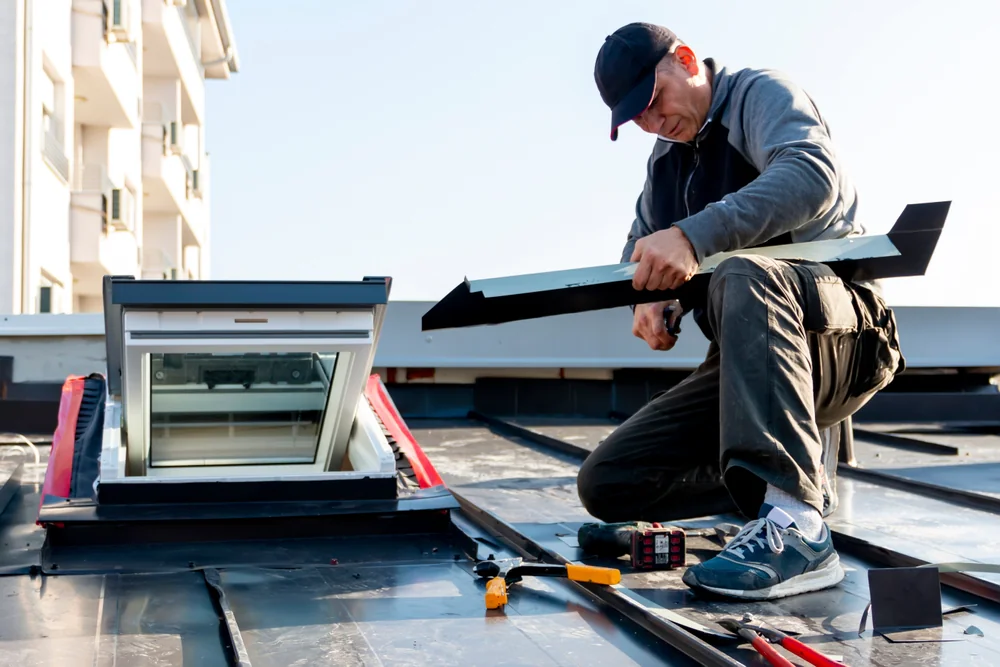
One of the most common questions we hear is whether you can just install metal roofing over existing shingles to save on labor costs. The short answer is: most experts advise against it. When metal panels are laid over old asphalt, moisture can get trapped between the layers, and over time that leads to mold, rot, and structural damage underneath a roof that looks fine from the outside. A proper tearoff — removing the old material down to the deck — is almost always the right approach.
Beyond the tearoff, quality aluminum roofing installation involves a few specific details that separate good work from work that causes problems later. The underlayment has to be compatible with aluminum, since some standard underlayments react chemically with the metal. Fasteners need to be aluminum-compatible to avoid galvanic corrosion. And flashing — at valleys, penetrations, and edges — needs to be precise, because improper flashing is the leading cause of leaks in metal roofing systems.
Metal Roofing Installation Cost: What Suffolk County Homeowners Should Expect to Pay
Aluminum roofing typically costs between $7 and $18 per square foot installed, depending on the profile, the complexity of your roof, and the contractor. For a full roof replacement on a typical Suffolk County home, the total range runs from roughly $14,000 to $45,000. Standing seam aluminum — the premium residential format — generally falls between $9 and $16 per square foot installed.
Asphalt shingles cost significantly less upfront, usually two to three times less than metal for a comparable installation. That gap is real, and it's worth acknowledging. But the comparison that actually matters is the 40-year picture, not the day-one invoice.
Here's the math most homeowners don't run: asphalt shingles last 20 to 30 years under normal conditions. In Suffolk County's coastal environment, with salt air, nor'easter winds, and freeze-thaw cycling, the realistic lifespan for asphalt is often closer to the lower end of that range. That means many homeowners will replace an asphalt roof two or even three times over the same period that one aluminum roof would last. Two asphalt replacements at $8,000 to $12,000 each equals $16,000 to $24,000 — before factoring in the higher energy costs, the more frequent repair calls, and the storm damage that aluminum would have shrugged off. When you lay those numbers side by side, the upfront premium for aluminum starts to look a lot more reasonable. For many homeowners, it's not the more expensive option over time. It's the less expensive one.
There's also a property value angle worth mentioning. Homes with metal roofs typically appraise 1 to 6 percent higher than comparable homes with asphalt shingles. On a Suffolk County home valued at $500,000 — which is not an unusual number in communities like Huntington, Northport, or East Setauket — that's a meaningful increase in resale value.
Common Questions Suffolk County Homeowners Ask Before Choosing Aluminum Roofing
The noise question comes up almost every time. Will an aluminum roof be loud during a rainstorm — or worse, during a nor'easter? The honest answer is: not if it's installed correctly. When aluminum roofing is laid over solid sheathing with appropriate underlayment, which is standard practice for residential installation, the noise difference compared to asphalt shingles is negligible. The "tin barn in a rainstorm" experience that people are imagining comes from thin, uninsulated corrugated metal on agricultural structures — not from a properly installed residential roof. Most homeowners who've made the switch report no noticeable change in rain noise at all.
Another question we hear often is whether aluminum roofing will dent. There's a distinction worth making here: thin decorative aluminum, like gutters or flashing, dents easily. Residential-grade aluminum roofing panels are a different product entirely — they're engineered for structural performance. If hail resistance is a specific concern in your area, ask us about the gauge of the panels and the product's hail resistance rating before signing anything.
Some homeowners ask whether metal roofing attracts lightning. It doesn't — at least not any more than any other roofing material. And if lightning does strike, a metal roof is actually safer than asphalt or wood shake because it won't ignite. Metal roofing is non-combustible and carries a Class A fire rating under UL 790 standards, which is the highest fire resistance rating available. That rating can also translate to homeowners insurance discounts, depending on your carrier.
Finally, a lot of people ask whether aluminum roofing works with solar panels. It does, and quite well. Standing seam aluminum in particular is considered one of the most solar-compatible roofing systems available because panels can be attached without penetrating the roof surface. For Suffolk County homeowners thinking about adding solar down the road, that compatibility is worth factoring into the material decision now.
Is Aluminum Roofing Worth It for Long Island Homes? Here's the Bottom Line
If you're comparing aluminum roofing to asphalt shingles on day-one cost alone, asphalt wins. That's just the math. But if you're comparing them on what you'll actually spend over the next 40 years — factoring in replacement cycles, energy bills, storm repairs, and the specific conditions that Long Island roofs face — the picture looks very different.
Aluminum lasts two to three times longer, reflects heat that would otherwise drive up your PSEG bill every summer, and holds up to the salt air, wind, and freeze-thaw cycles that shorten the lifespan of asphalt roofing in coastal Suffolk County. It's not the right choice for every homeowner or every budget, but it's a choice that deserves a real, honest look before you default to replacing shingles with more shingles.
If you're weighing the options for your home in Brookhaven, Huntington, Babylon, or anywhere across Suffolk County, we've been doing this work locally for over 10 years — with our own crew, no subcontractors, and a straight answer on what actually makes sense for your roof.
Article details